- From Day One: People & HR
- Posts
- AI Has Our Attention, But Is There a Strategy?
AI Has Our Attention, But Is There a Strategy?

From Day One Editors
December 16, 2025 • Estimated Reading Time: 9 minutes
As AI expands in the workplace, “HR is going to be the one figuring out how to connect the dots,” said Dan Kaplan, managing partner and co-head of the CHRO practice at ZRG Partners. Company-wide AI rollouts are ultimately an HR matter, he argues, since they affect productivity, headcount, culture, and revenue.
While 68% of companies are using AI, just 14% have a formal strategy, according to a report from McLean & Company. Approaches to training up the HR team on the latest in AI tech vary by organization, from classroom sessions to company-wide knowledge-sharing meetings, messaging channels for swapping tips, and virtual sandboxes where employees can play and experiment.
Here are six ways HR leaders are training their teams to use–and lead–with artificial intelligence.
Hackathons
At New York Life, AI hackathons–intensive, collaborative workshops focused on solving specific problems–have become one of the most effective ways to build HR’s proficiency. “Of the thousands of GPTs created at New York Life, many of the most-used were developed by HR,” said Elliot Steelman, head of employee relations and leader of the HR department’s AI initiative at New York Life. “Employees in our HR department have collectively built more than 100,” he told From Day One contributing editor Emily McCrary-Ruiz-Esparza.
The company’s CEO, Craig DeSanto, has been unequivocal: using AI is not optional. Yet the company has avoided ugly ultimatums by setting employees free to have fun with the tech. Starting with learning and exploration made adoption less intimidating. “Employees felt like they were driving the change, not chasing it,” Steelman said.
Internal Tool Development and Testing
Some HR teams are co-designing their own AI productivity tools. The people-operations team at Nextdoor, the hyperlocal social network, began experimenting with ChatGPT in 2022. The head of compensation and talent, Tony Castellanos, said that their early willingness to tinker with a tool that was still clunky, and adapt it to their needs, helped build lasting proficiency.
“You need curiosity. You also need resilience and perseverance,” he said. His team has developed their own AI tools to automate common workflows and answer employees’ questions about things like open enrollment and immigration.
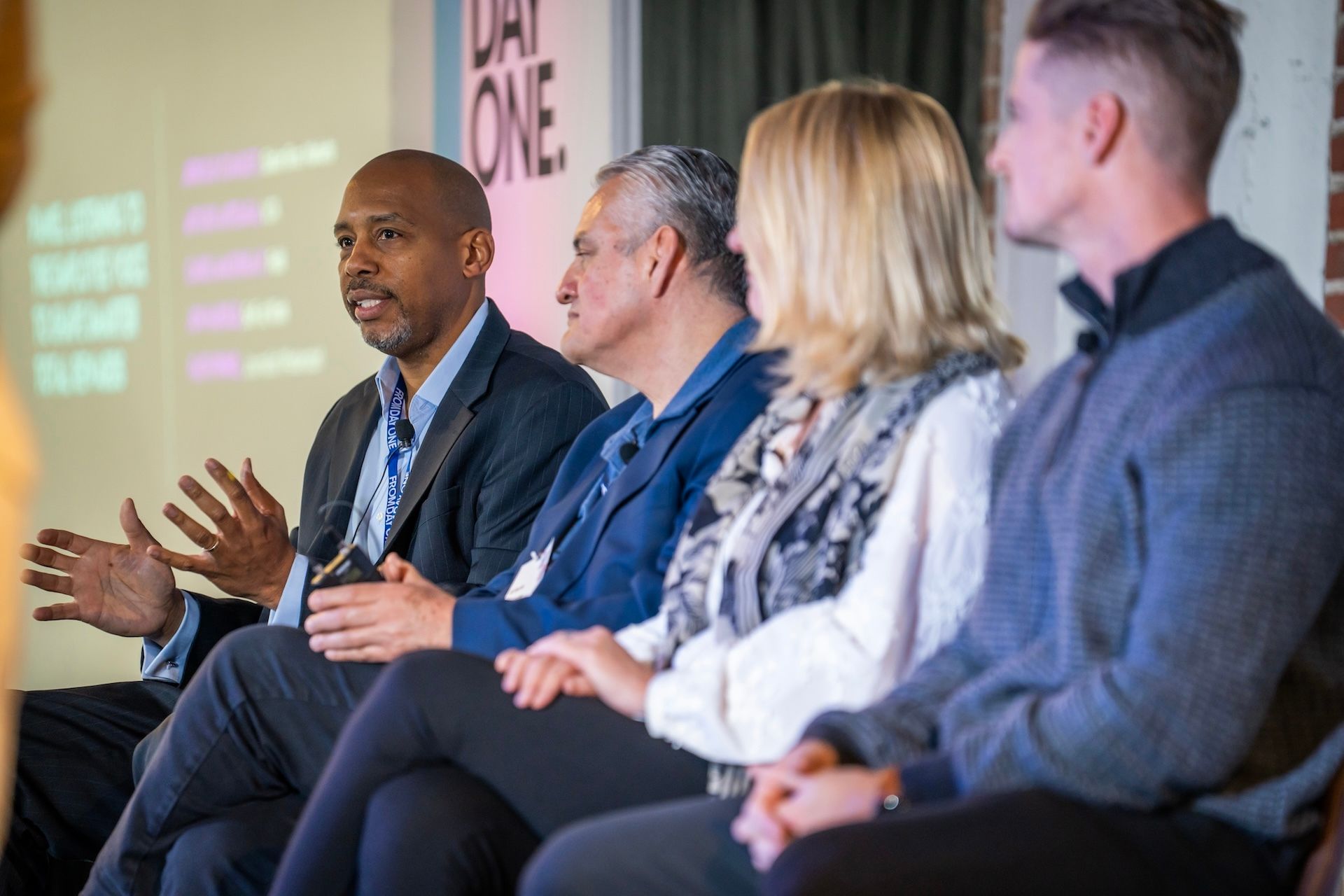
Some people-operations experts, like Janine Yancey, founder and CEO of the training company Emtrain, want the department to take the initiative when it comes to AI use. “I’d love to see HR leaders be the first to the table,” she said at From Day One’s Midtown Manhattan conference in October.
Secure Sandbox Environments
Training needn’t be too structured, or even goal-oriented. Many companies simply invite employees to experiment with sanctioned tools in “sandbox” environments, where applications and code can be tested safely.
At biotech firm Genentech, all employees are trained on AI principles, ethics, and responsible use. The company encourages experimentation within sandboxes, coupled with live sessions and peer-learning events where colleagues show off what they’ve built.
These safe, low-stakes spaces where employees are free to make mistakes, take risks, and “learn out loud,” are essential to adoption, said Amelia Rosenman, director of programs at the Experience Institute, during a From Day One webinar. “Share both your successes and your failures. That’s what creates that safe environment, that risk-free sandbox,” she said.
The pressure for HR teams to be first adopters as new software and AI tools are launched is intense. However, for Dibyendu Sharma Mondal, the head of people analytics, HR tech, strategy, and operations at Unisys, the key to successfully integrating new technology into existing systems isn’t quick adaptation, but being a “thoughtful adopter.” | Career advancement previously followed a predictable path: work hard, earn the title, secure the raise. But that’s no longer the reality. Ralph Nader, SVP, head of talent at IPG Mediabrands, puts it plainly: “There are certain organizations or certain functions where it’s really easy to outline a very traditional career ladder. That said, that’s not reality for most.” |


Despite his great corporate success, Patagonia founder Yvon Chouinard doesn’t have a computer, cell phone, or email address. “He’s a self-proclaimed dirtbag. He’s a mountaineer. He is most comfortable roaming in the wilds of Patagonia. He does not like to be governed. So where did his ambition come from?” David Gelles, author of Dirtbag Billionaire, was asked. | A common frustration voiced by Spanish-speaking grandmothers and mothers across the country sparked a revolution at GE Appliances. Their question was simple: “Why can’t a washing machine understand us?” Answering that question led to the company reimagining its corporate culture, talent pool, and approach toward innovation, says the company’s CHRO. |


Upcoming Webinars
December 16
GLP-1 medications have quickly become a major consideration in corporate health and wellness strategies, but their skyrocketing costs are forcing HR and benefits leaders to rethink long-term approaches. In this session, experts from the nutrition and wellness program Nutrium will show how employers can strike the right balance between cost, clinical outcomes, and employee engagement. How? By pairing, or even replacing, GLP-1 programs with a more personalized, nutrition-driven approach. Backed by validated data, our speakers will show how organizations can achieve comparable or even better results at a tiny fraction of the cost.
December 17
As healthcare costs outpace wages and inflation, employers face a familiar challenge: controlling medical spend without reducing benefits. One of the most powerful, and overlooked, levers is helping employees choose higher-quality doctors. We’ll show how leading employers are using data to guide employees to better care and meaningfully reduce costs. We'll hear how Advance Auto Parts has faced rising medical trends and learn their strategies for tackling cost while enriching benefits. You’ll also learn how they have partnered with Garner Health to drive widespread employee engagement across a distributed workforce.
December 18
Most AI in HR still requires constant oversight, or worse, it creates more work than it removes. What if your HR team could rely on an AI teammate that resolved complex cases, spanned systems, and delivered outcomes in minutes instead of hours? In this session, Wisq shares a unique point of view on what it takes to build an agentic HR operating model, one that blends deep HR expertise with autonomous reasoning to transform service delivery and operations. You’ll get a behind-the-scenes look at how agentic AI is making AI-first HR possible, even in compliance-heavy, high-stakes environments.
February 5
In today's competitive talent market, the candidate experience can make or break your ability to attract and retain top performers. But what does it really take to build trust and transparency throughout the hiring journey—for both candidates and employers? Join us for an insightful fireside chat where we'll explore how leading organizations are reimagining the hiring process to create authentic, trustworthy experiences that benefit everyone involved.
March 10
Employee financial stress looks different across generations, roles, and industries, but the impact on engagement and retention is universal. Leaders will share how they transformed financial well-being from a passive benefit into a high impact engagement driver. You’ll hear how these employers increased engagement tenfold by offering financial benefits that meet employees where they are, combining personalized tools, product perks, and relevant education across every stage of the employee lifecycle. Speakers will discuss which incentives actually move employees to act, why clear and repeated communication matters, and how embracing intentional over marketing helped cut through noise and drive sustained utilization.
Sponsor Spotlight: Empathy
When employees feel grief, the negative impacts of it can show up in the forms of reduced productivity, absenteeism, burnout and reliance on other team members to pick up the slack. Data shows that “79% of employees considered quitting their jobs after a major loss, in part because of how their employers supported or didn’t support them,” said Sophie Ruddock, chief operating officer at Empathy. During a thought leadership spotlight at From Day One’s Manhattan conference, she added that 76% of workers feared they would be fired due to their inability to fully bring themselves up to their regular work standards. Read the full story here.
Sponsor Spotlight: CodeSignal
Companies are increasingly feeling a kind of FOMO when it comes to AI in hiring, says Adam Vassar, head of talent science and learning design at CodeSignal. Just six months ago, many employers were still taking a wait-and-see approach to AI adoption, and some were playing defense against job seekers who were using AI to complete assessments and interviews. Not anymore. Vassar says his clients are asking to pilot new programs. “They’re less afraid about being the first one to make a mistake, and more concerned about the fear of missing out and being left behind,” he said in a From Day One webinar. Read the full story here.
From Day One in a City Near You
The Georgia Aquarium in Downtown Atlanta
The Georgia Aquarium in Downtown Atlanta
Asia Society Texas Center on Southmore Boulevard
Convene on Hamilton Square
Convene on 101 Park Ave
Convene on 101 Park Ave
JFK Presidential Library & Museum
Computer History Museum in Mountain View
Computer History Museum in Mountain View
Seattle Art Museum in Downtown Seattle
McNamara Alumni Center at the University of Minnesota
The Art Institute of Chicago in Grant Park
Alfred Lerner Hall at Columbia University
AT&T Executive Education and Conference Center

As the marketing landscape becomes more complex, organizations are investing in specialized roles and tools to keep pace with change. Marketing tech and operations leaders are now critical in managing everything from CRM systems and automation platforms to AI-driven content and analytics. How are companies building and managing their marketing tech stacks to support their goals? Which AI tools are delivering real value for marketers, and how can teams evaluate what’s worth adopting? What strategies help ensure alignment, data integrity, and effective training across marketing teams?
At a time when the skills needed tomorrow are often unknown today, companies must build learning cultures that enable employees to upskill, reskill and confidently adapt to evolving roles. How can organizations cultivate a culture that embraces continuous learning and rapidly responds to shifting skill demands? What tools and programs, from gig learning marketplaces to AI-driven simulations, are most effective? How can personalized learning paths and micro-credentials accelerate skill development and career advancement?
A single job posting can attract hundreds, or even thousands, of applications due to accessible hiring platforms and technology. For talent teams, the challenge is no longer just attracting interest, but quickly identifying the right candidates, maintaining a fair process, and aligning hiring with long-term business goals. How can employers use AI and automation to streamline hiring without compromising fairness or human judgment? How is skills-based hiring changing how companies define fit and evaluate candidates?
With so much content online, getting the right material in front of the right people is as challenging as creating it. Marketers are focusing on smarter content distribution strategies and SEO integration to ensure their work actually gets seen. What mix of channels–including owned media, social, search, email, and more–is most effective for amplifying content reach, and how should marketers decide where to invest their efforts? How are algorithm and technology changes impacting content visibility, and how can content marketers adapt their distribution tactics in response?
Frontline, hourly workers keep businesses running but often face unique challenges, from limited access to training to feeling disconnected from corporate support. Employers need fresh strategies to attract and retain this vital workforce while investing in their growth and engagement. What innovative approaches, tech, and tools, are helping companies attract and retain frontline talent in a competitive labor market? How can employers design upskilling and development programs that fit the realities of frontline roles? In what ways can technology and communication tools improve connection and inclusion for this population?
As employees seek more from their workplace, support for mental health, family care, financial stability, and long-term security, benefits leaders are under pressure to deliver comprehensive solutions, even while meeting corporate needs for cost controls. What are the most in-demand benefits today, and how are employers prioritizing them? How can companies build total rewards strategies that are both sustainable and responsive to evolving employee needs? How are companies using feedback to refine and communicate their benefits?
Brand marketers shape a company’s identity, reputation, and emotional connection through positioning, messaging, and storytelling. At the same time, consumers are quick to spot empty messaging and trend-following. To build trust and stand out, companies have to focus on consistent communication across channels like email, social media, influencer partnerships, and advertising. How can brands create authentic stories that truly resonate? How can they balance standing out with building trust and long-term loyalty?
Today’s employees are juggling caregiving, financial stress, and the daily challenge of staying mentally and physically well. How can employers tailor benefits to meet the distinct needs of multiple generations in the workforce while maximizing engagement and ROI? What are the most effective and forward-thinking benefits, from financial wellness and mental health resources to reproductive care and family support? How can companies evaluate the impact of their offerings on retention, engagement, and workplace culture?
With third-party cookies on the way out and stricter privacy regulations, marketers are rethinking how they measure and attribute success. Traditional tracking is getting harder, yet demonstrating ROI remains a top priority. How can marketers adapt attribution models when faced with data gaps? How can marketing teams leverage AI and machine learning to predict customer behavior or campaign outcomes? How can leaders elevate their team’s data literacy and ensure that employees at all levels can interpret and act on analytics insights?
Even with tighter budgets and leaner teams, employees are expected to continually deliver. Employers need smart tools and strategies that boost productivity while supporting performance and checking in on employees in ways that feel helpful rather than overbearing. What tools and technologies are proven to help employees work smarter, not harder? How can AI help workers save time on routine tasks so they can focus on what really matters? How can leaders measure productivity in ways that capture quality, creativity, and collaboration, not just hours worked?
Organizations must prepare for a future shaped by new technologies, changing employee expectations, and evolving social and economic trends. Success depends on adapting culture, strategy, and workforce models to thrive. What emerging technologies and workplace models will most impact how work gets done in the next five years? How can organizations build inclusive and resilient cultures that attract and retain diverse talent? How should companies balance automation and human skills to create meaningful and productive work?