- From Day One: People & HR
- Posts
- AI Is Smarter Than We Think. But So Are We.
AI Is Smarter Than We Think. But So Are We.

From Day One Editors
January 29, 2026 • Estimated Reading Time: 9 minutes
There’s no real benefit in sugarcoating the future of work: AI is sure to replace jobs, and already has.
But that’s only half the story, says Paul Pavlou, PhD, the dean of the University of Miami Herbert Business School. The other half, how AI can elevate human potential in ways we’ve barely begun to imagine, demands the same attention.
During a fireside chat in Miami, Pavlou shared insights from his research on AI, decision-making, and organizational change, arguing that AI is “an order of magnitude” more transformative than breakthroughs like electricity or the internet.
Redefining What Technology Can Do
Unlike tools that simply automate tasks, AI represents something fundamentally different: a technology designed to overcome human limitations rather than merely extend or mimic human capabilities. “It thinks like us [and in some ways], better than us,” he said. This distinction shifts the conversation from what AI can do for us to what it reveals about our own abilities.
The implications become stark when examining certain professions. Take radiology, for example, Pavlou points out that machines can analyze scans faster and more accurately than physicians. With that in mind, what is his advice for prospective students? Don’t become a radiologist if your job security depends on regulations requiring a human to perform tasks a machine handles better.
This isn’t necessarily bad news for society, he says. Better, faster diagnostic capabilities mean earlier disease detection and improved patient outcomes, even if it means fewer radiologists.
The Autonomy Paradox
Pavlou’s research on consumer decision-making revealed an intriguing paradox: people usually prefer to make their own choices, even when they know an algorithm could, theoretically, recommend something better. In studies examining how shoppers choose clothing, researchers found that shoppers, particularly women, would rather make the final decision instead of accepting AI’s recommendation.

This desire for autonomy extends beyond retail. Whether you’re an HR manager, or an executive, professionals want to understand why AI recommends specific actions rather than blindly accepting its output. “I want to have the last word,” Pavlou said to describe how people want to remain empowered to make their own decisions.
This insight has big implications for how organizations use AI. The technology works best not as a replacement for human judgment, but as a tool that enhances it, with humans maintaining ultimate control—and accountability.
Beyond Individual Jobs to Lifelong Learning
According to Pavlou, there has to be a shift in how organizations think about workforce development. AI’s rapid advancement means upskilling and reskilling can no longer be confined to early career stages. Companies increasingly approach him for guidance on what their employees need to know about AI.
This demand has shifted executive education, elevating it from a secondary offering to a strategic priority, says Pavlou. Organizations need different training at different levels: foundational skills for entry-level employees, experimental mindsets for middle managers, and strategic frameworks for C-suite executives who must create organizational cultures open to AI adoption while establishing appropriate guardrails.
RECENT EVENT HIGHLIGHTS
Some companies are rethinking where responsibility for well-being sits inside the organization. At Fox Sports, that responsibility lives at the intersection of HR and business operations, says Kim Beauvais, EVP of HR and business operations. She sees the combination of the two as “how the organization moves within the business to take care of its biggest investment: its people.” | From expanded mental health support to virtual healthcare access, employers have adapted to employees’ evolving needs since Covid. But that’s only part of the picture: workers also need more affordable healthcare. How can employers respond to these requests, and what other forms of economic support do employees expect from company leaders? |


“You can always count change as a constant,” Nicole Conley, associate director of employee experience at ibex, said. But it doesn’t have to be a setback. Psychological flexibility is the skill that separates teams that crumble under the pressure created by disruptive technologies from those that successfully adapt to their new realities. | The facts are striking: 1 in 5 employees worldwide feel lonely. “We’re dealing with a new generation of workers who are having a hard time connecting,” said Constance Jones, news anchor at NBC 6. “It’s up to us to create environments where not only can our employees strive and do better, but also they can be productive,” she said. |


Upcoming Webinars
February 5
In today's competitive talent market, the candidate experience can make or break your ability to attract and retain top performers. But what does it really take to build trust and transparency throughout the hiring journey—for both candidates and employers? Join us for an insightful fireside chat where we'll explore how leading organizations are reimagining the hiring process to create authentic, trustworthy experiences that benefit everyone involved.
February 19
The transition from maternity leave back to work is one of the most critical moments in an employee’s experience, and one of the most vulnerable points for retention. In this session, we’ll discuss how supporting postpartum recovery, mental health, lactation support, and a clear return to work plan can help new parents succeed and build stronger teams in the workplace. What does meaningful postpartum support look like beyond paid leave? How can managers be equipped to lead with empathy during this period? What does a structured return to work plan include, and how can it reduce burnout and turnover?
February 26
Comprehensive, family-focused health benefits are no longer just a perk. They’re a strategic tool for managing costs, improving outcomes, and strengthening engagement. Backed by new insights from our audience research, this session will explore how a smarter benefits design can deliver value for both employees and the business. Which benefits have the greatest opportunity to reduce healthcare costs? What makes a family health benefit comprehensive and inclusive for today’s workforce? How can companies measure the ROI on their offerings?
March 10
Employee financial stress looks different across generations, roles, and industries, but the impact on engagement and retention is universal. In this session, leaders from different industries will share how they transformed financial well-being from a passive benefit into a high impact engagement driver. You’ll hear how these employers increased engagement tenfold by offering financial benefits that meet employees where they are, combining personalized tools, product perks, and relevant education across every stage of the employee lifecycle. Speakers will discuss which incentives actually move employees to act, why clear and repeated communication matters, and how embracing intentional over marketing helped cut through noise and drive sustained utilization.
March 12
Benefits budgets are under continued scrutiny. Health premiums are at a 15-year high, and the gap between what employees need and what employers can afford keeps getting wider. For years, Lifestyle Spending Accounts were treated as far-ranging, discretionary lifestyle perks. But new data from Forma’s 2026 LSA Benchmark Report tells a different story. Built on insights from 300+ employers and 1 million employees across 110 countries, the report shows a clear shift: leading organizations use LSAs as infrastructure to deliver purposeful benefits efficiently, not as an overwhelmingly broad perk.
March & Beyond
Sponsor Spotlight: Emtrain
As a former HR attorney, Janine Yancey says that she hasn’t actually run into that many truly bad people. There are a handful of “bad eggs,” as she puts it, but most of the cases she handled involved decent folks who were struggling to manage workplace demands and the many different personality types they have on their teams. “It’s just people being people. They have different perspectives on situations. They have different communication styles, which leads to conflict,” she said. Her background led her to think of corporate culture a little differently; it's not just the history and values and mission, it’s the shared language and people skills that a company promotes. Read the full story here.
Sponsor Spotlight: Simpplr
HR teams are under immense pressure to deliver a great employee experience, often with tools and processes that haven’t meaningfully evolved in years. The challenge of improving the employee experiences is not a lack of data on their employees. In fact, HR has access to more information than ever before, from engagement surveys and performance reviews to benefits uptake and attendance records. The problem is that this information is scattered across incompatible systems. When connections can’t be made, HR leaders miss the patterns forming right in front of them, like the early signs of burnout and disengagement or escalating turnover that could be stopped. Read the full story here.
From Day One in a City Near You
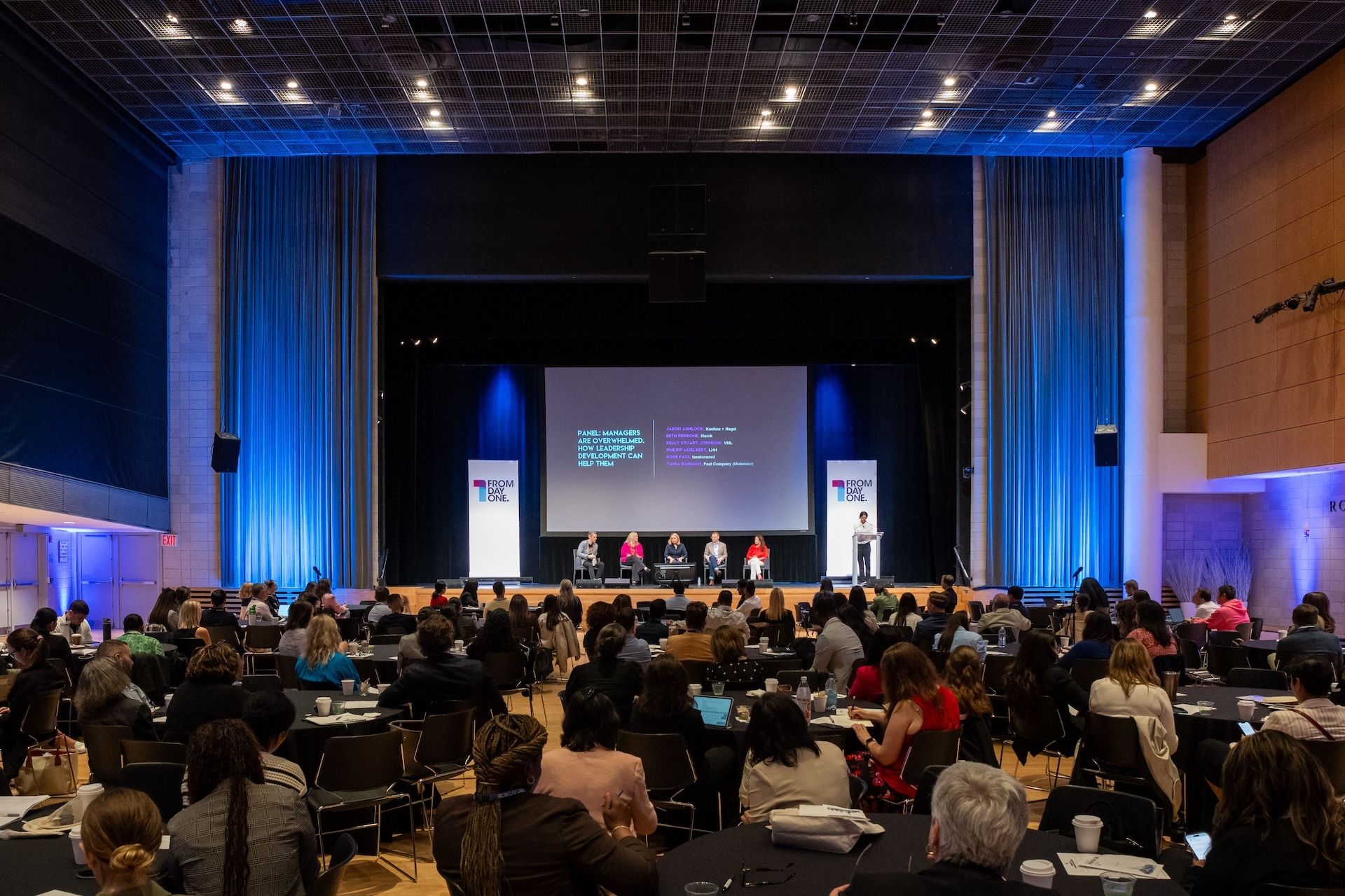
Asia Society Texas Center on Southmore Boulevard
Convene on Hamilton Square
Convene on 101 Park Ave
Convene on 101 Park Ave
JFK Presidential Library & Museum
Computer History Museum in Mountain View
Computer History Museum in Mountain View
Seattle Art Museum in Downtown Seattle
McNamara Alumni Center at the University of Minnesota
The Art Institute of Chicago in Grant Park
Alfred Lerner Hall at Columbia University
AT&T Executive Education and Conference Center
Half-Day Virtual Conferences

At a time when the skills needed tomorrow are often unknown today, companies must build learning cultures that enable employees to upskill, reskill and confidently adapt to evolving roles. How can organizations cultivate a culture that embraces continuous learning and rapidly responds to shifting skill demands? What tools and programs, from gig learning marketplaces to AI-driven simulations, are most effective? How can personalized learning paths and micro-credentials accelerate skill development and career advancement?
A single job posting can attract hundreds, or even thousands, of applications due to accessible hiring platforms and technology. For talent teams, the challenge is no longer just attracting interest, but quickly identifying the right candidates, maintaining a fair process, and aligning hiring with long-term business goals. How can employers use AI and automation to streamline hiring without compromising fairness or human judgment? How is skills-based hiring changing how companies define fit and evaluate candidates?
With so much content online, getting the right material in front of the right people is as challenging as creating it. Marketers are focusing on smarter content distribution strategies and SEO integration to ensure their work actually gets seen. What mix of channels–including owned media, social, search, email, and more–is most effective for amplifying content reach, and how should marketers decide where to invest their efforts? How are algorithm and technology changes impacting content visibility, and how can content marketers adapt their distribution tactics in response?
Frontline, hourly workers keep businesses running but often face unique challenges, from limited access to training to feeling disconnected from corporate support. Employers need fresh strategies to attract and retain this vital workforce while investing in their growth and engagement. What innovative approaches, tech, and tools, are helping companies attract and retain frontline talent in a competitive labor market? How can employers design upskilling and development programs that fit the realities of frontline roles? In what ways can technology and communication tools improve connection and inclusion for this population?
As employees seek more from their workplace, support for mental health, family care, financial stability, and long-term security, benefits leaders are under pressure to deliver comprehensive solutions, even while meeting corporate needs for cost controls. What are the most in-demand benefits today, and how are employers prioritizing them? How can companies build total rewards strategies that are both sustainable and responsive to evolving employee needs? How are companies using feedback to refine and communicate their benefits?
Brand marketers shape a company’s identity, reputation, and emotional connection through positioning, messaging, and storytelling. At the same time, consumers are quick to spot empty messaging and trend-following. To build trust and stand out, companies have to focus on consistent communication across channels like email, social media, influencer partnerships, and advertising. How can brands create authentic stories that truly resonate? How can they balance standing out with building trust and long-term loyalty?
Today’s employees are juggling caregiving, financial stress, and the daily challenge of staying mentally and physically well. How can employers tailor benefits to meet the distinct needs of multiple generations in the workforce while maximizing engagement and ROI? What are the most effective and forward-thinking benefits, from financial wellness and mental health resources to reproductive care and family support? How can companies evaluate the impact of their offerings on retention, engagement, and workplace culture?
With third-party cookies on the way out and stricter privacy regulations, marketers are rethinking how they measure and attribute success. Traditional tracking is getting harder, yet demonstrating ROI remains a top priority. How can marketers adapt attribution models when faced with data gaps? How can marketing teams leverage AI and machine learning to predict customer behavior or campaign outcomes? How can leaders elevate their team’s data literacy and ensure that employees at all levels can interpret and act on analytics insights?
Even with tighter budgets and leaner teams, employees are expected to continually deliver. Employers need smart tools and strategies that boost productivity while supporting performance and checking in on employees in ways that feel helpful rather than overbearing. What tools and technologies are proven to help employees work smarter, not harder? How can AI help workers save time on routine tasks so they can focus on what really matters? How can leaders measure productivity in ways that capture quality, creativity, and collaboration, not just hours worked?
Organizations must prepare for a future shaped by new technologies, changing employee expectations, and evolving social and economic trends. Success depends on adapting culture, strategy, and workforce models to thrive. What emerging technologies and workplace models will most impact how work gets done in the next five years? How can organizations build inclusive and resilient cultures that attract and retain diverse talent? How should companies balance automation and human skills to create meaningful and productive work?