- From Day One: People & HR
- Posts
- Hiring for AI Skills Without Getting Played
Hiring for AI Skills Without Getting Played

From Day One Editors
May 20, 2026 • Estimated Reading Time: 8 minutes
Dani Monaghan knows exactly what’s going on when a job candidate pauses mid-sentence before answering questions, their screen suddenly switches, or their eyes dart to the side during interviews.
“There’s a lot of tells,” she said. As the SVP of global talent enablement at Expedia Group, Monaghan has learned to spot the subtle signs that someone is using AI to cheat during the hiring process. However, Expedia also wants to recruit people who are skilled, comfortable, and ethical in their use of AI.
It’s a fine line, and one that Monaghan explored in detail during a fireside chat with Rob Smith, the executive editor of Formidable, at From Day One’s Seattle conference.
Preventing candidates from cheating the hiring process with AI doesn’t require banning its use. Instead, Expedia sets explicit boundaries. “We are very clear with candidates where they can use AI in a process, and where they cannot use AI in a process,” Monaghan said. “We want them to use AI. Those are the people that we want to hire, people who know AI, and are comfortable with AI, but ethical standards are equally as important to us.”
Expedia uses both human observation and technology to catch dishonest candidates. Monaghan notes that the company even employs one of its vendors’ AI cheating-detection tools.
The line becomes particularly delicate for roles where problem-solving with large language models is part of the candidate’s assessment.
“We want them to problem solve and be able to explain to us how they solve the problem with AI, ethically and responsibly,” Monaghan said. Candidates who can articulate how they tested for bias, trained their models, and validated outcomes demonstrate the kind of AI literacy Expedia prizes. Those who try to game the system, however, reveal a character mismatch that outweighs any technical brilliance.
Mapping Where AI Belongs
Expedia didn’t rush to deploy AI in hiring and then figure out the ethics later. “If you just put AI on a bad process, you have a worse outcome,” Monaghan said.
Instead, the talent team remapped its entire hiring journey, deciding precisely where AI excels and where humans must retain control. “We’ve built a roadmap for where we would use AI, where AI does its best work, and then where we would use humans, where we do our best work. But ultimately, the human is the final decision maker and the stamp of approval.”
That roadmap has already produced powerful tools. Monaghan described an AI agent that handles hiring-manager intake meetings, generates job descriptions, gathers competitive intelligence, and even estimates time-to-fill, all in real time.
Getting Rid of Bias Before It Begins
AI bias is one of the most discussed risks in talent technology, and Monaghan emphasizes that Expedia approaches it with a preemptive, rather than purely reactive, strategy. “You’ve got to de-bias your training data before you actually train the model,” she said.
Beyond cleaning the data, Expedia audits its models continuously and keeps a human in the loop for final decisions. All experiments happen inside walled gardens until they’re ready for production, where monitoring remains intense.
This disciplined approach reflects a broader philosophy Monaghan calls “AI optimistic, but balanced by AI responsibility.” The company aims to harness AI’s speed and scale without allowing opaque algorithms to make high-stakes choices about people’s careers.
RECENT EVENT HIGHLIGHTS
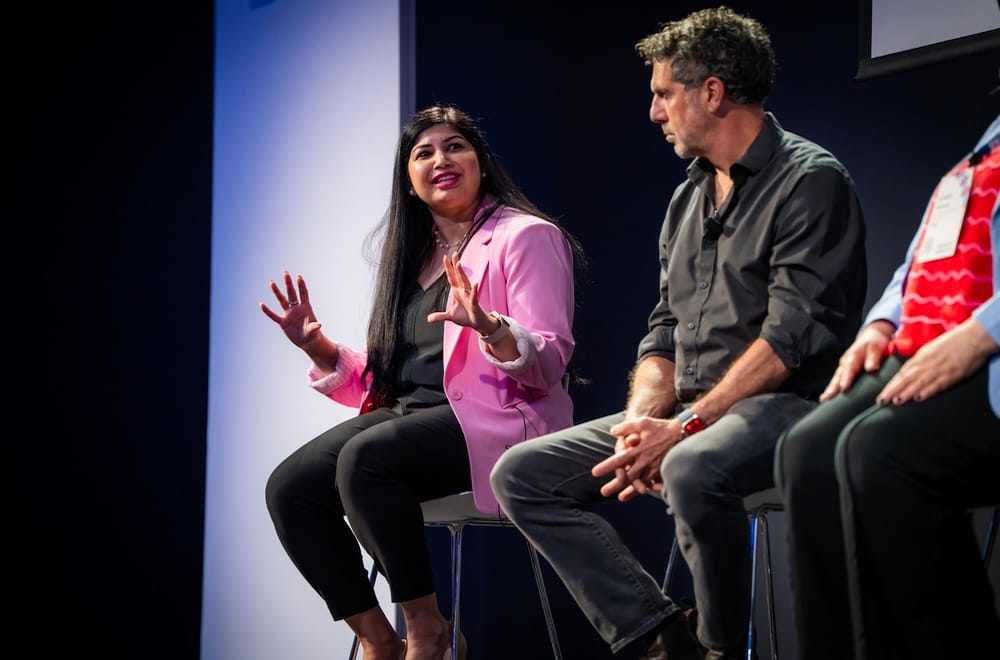
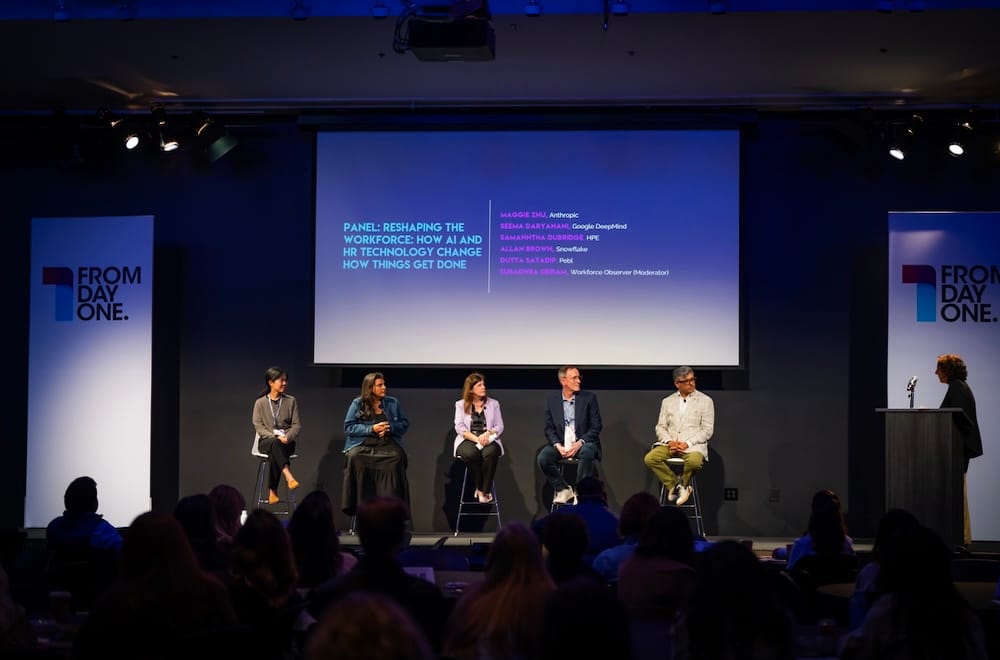
Given the amount of change and disruption in today’s workplace, the employee experience is really the change experience, says Renu Sharma, head of learning and skill development at HP. “Learning and change management are no longer a support function. They’re really defining the employee experience,” Sharma said. She emphasized clarity, transparency, and skill-building to help employees adapt. | “What’s fundamentally changing in how work gets done in your organization because of AI?” asked moderator Subadhra Sriram, founder and host of Workforce Observer. The answer? Well, almost everything. “Every individual’s impact has changed a lot. What one person could do before just means something very different with all the tools we have now,” said Maggie Zhu, people partner at Anthropic. |
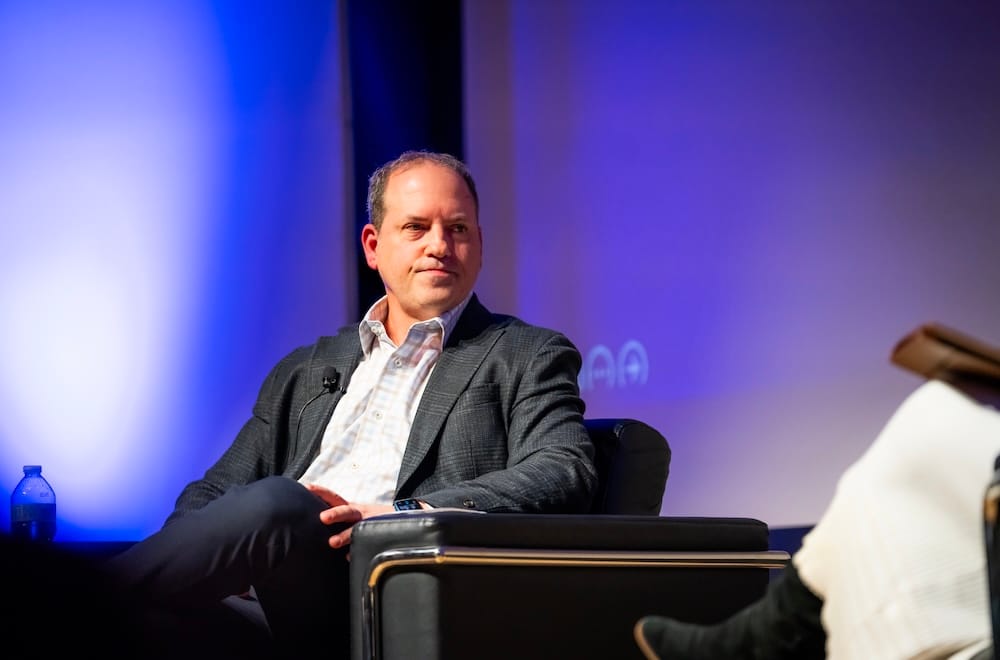
From the vast warehouse to the loud machinery, the first day inside a Humana pharmacy dispensing site can be jarring. Workers who walk in expecting something quieter may feel shocked. “You don’t want the first time they see the inside of a dispensing site to be the first day on the job,” said Laura Bartus, head of learning at CenterWell Pharmacy, a division of Humana. That moment of surprise, she says, is a fully preventable failure of recruitment. | Todd Reeves spent years running payroll early in his career. “Don’t ever do that,” he joked. “There’s no good outcome other than perfection in payroll.” The joke illustrated something true about the function. HR has long been defined by getting the details exactly right. What Reeves, chief people officer at Zoom, described in his fireside chat was a profession on the cusp of shedding much of that burden entirely, thanks to new technology. |

Upcoming Webinars
May 28
We’re in a new frontier with AI, yet getting buy-in from leadership and the legal department on AI tools can often be a roadblock. Still, AI is already finding its place in modern hiring, from managing early-stage volume to supporting more structured and consistent interviews. In this session, panelists will explore how organizations build confidence in AI-driven solutions by starting with practical, controlled use cases, setting clear guardrails, and demonstrating real, measurable results. Where is AI delivering value, and where does human judgment remain essential? How do we protect the integrity of our process? How can we ensure fairness and maintain defensibility? How do we move faster without sacrificing quality? Panelists will explore these questions and more.
June 18
AI is changing work faster than most organizations can define, assess, and build the skills needed to use it well. This webinar moves beyond broad talk about “AI skills” to offer a practical framework for understanding where AI belongs, what people need to do with it, and how organizations can support safe, effective adoption. Drawing on HiBob’s research and its AI Skills Framework, the session covers AI readiness, individual AI usage, and organizational AI usage—spanning AI literacy, prompting, output evaluation, workflow redesign, automation, and governance.
June 23
Talent acquisition leaders are being asked to do more with less. Budgets are tightening as organizations respond to economic uncertainty and increasing investment in AI. At the same time, hiring teams need to improve efficiency while making sure new hires have the skills to succeed and create value for the business. This means looking beyond immediate role requirements and identifying people who can adapt as skill needs change over time. A skills-based hiring strategy is essential to making that happen. Join this session to learn what a skills-based hiring process looks like and how to identify the skills that predict success across roles and industries.
June 30
AI is often framed as a way to make HR more efficient. That framing misses what’s actually happening. As AI begins to absorb a significant share of operational work, the role of HR doesn’t just accelerate; it shifts. The function moves from processing requests to designing systems, managing human-AI collaboration, and building new capabilities that didn’t exist a few years ago. In this session, Jim Barnett, CEO and co-founder of Wisq, shares both a point of view and what we’re learning on the frontline of building agents. Drawing from real deployments, he'll walk through what actually changes when AI takes on HR work: cases resolved in minutes (not days), 24/7 policy guidance, and HR teams redeployed into more complex employee and labor relations work.
September 15
As AI reshapes recruiting and candidate fraud becomes more sophisticated, trust is emerging as one of the most valuable currencies in hiring. What are candidates most concerned about when it comes to AI in the hiring process, and how can employers respond? How has the rise of AI-generated resumes, assessments, and interview responses changed how employers evaluate talent? What practices ensure hiring remains fair and human-centered as automation expands? In this session, executive panelists will discuss how they are contributing to more transparent and credible hiring experiences, while ensuring confidence in candidate authenticity.
September 17
AI has fundamentally changed hiring for both candidates and recruiters, making the process faster but also more complex. As technology accelerates decision-making, organizations must focus on being truly prepared for AI, not just adopting it. Join our panel of HR and talent experts to learn how to navigate this shift. You'll discover: what AI readiness means and why it is critical for success, how organizations are combining technology, skills data, and people science for smarter decisions, the new capabilities talent acquisition teams need to hire and lead in an AI-enabled world, and strategies to build trust and transparency throughout the hiring process.
Sponsor Spotlight: Corporate Traditions
Employee-recognition programs are intended to boost morale, strengthen retention, and reinforce culture. But many organizations may be unknowingly reducing the impact of those efforts through the way rewards are delivered. At From Day One’s Boston benefits conference, Tray Ross, VP of growth at Corporate Traditions, said common incentives such as gift cards, bonuses, and other cash equivalents often create avoidable tax consequences, payroll complexity, and employee frustration. His message to HR leaders: appreciation programs should feel rewarding to employees while remaining efficient and compliant for the business. Read the full story here.
Sponsor Spotlight: CodeSignal
Leaders know they need to adopt AI. But how to actually make that shift can be unclear. At From Day One’s Silicon Valley conference, Tigran Sloyan, CEO and co-founder of CodeSignal, outlined how organizations can move beyond basic awareness to true AI fluency. His core point: AI isn’t just another tool. It’s a technology transformation, which is something every company has faced before.“Every time we’ve created new technology, we have to teach humans how to use that technology, and that essentially became a job,” he said. Read the full story here.
From Day One in a City Near You
The Art Institute of Chicago in Grant Park
Alfred Lerner Hall at Columbia University
AT&T Executive Education and Conference Center
The Union League of Philadelphia
Venue Six10 in Downtown Chicago
Venue Six10 in Downtown Chicago
Hudson Loft in Downtown LA
Hudson Loft in Downtown LA
Convene at 237 Park Ave.
Convene at 555 Broadway
Half-Day Virtual Conferences
As employees seek more from their workplace, support for mental health, family care, financial stability, and long-term security, benefits leaders are under pressure to deliver comprehensive solutions, even while meeting corporate needs for cost controls. What are the most in-demand benefits today, and how are employers prioritizing them? How can companies build total rewards strategies that are both sustainable and responsive to evolving employee needs? How are companies using feedback to refine and communicate their benefits?
Brand marketers shape a company’s identity, reputation, and emotional connection through positioning, messaging, and storytelling. At the same time, consumers are quick to spot empty messaging and trend-following. To build trust and stand out, companies have to focus on consistent communication across channels like email, social media, influencer partnerships, and advertising. How can brands create authentic stories that truly resonate? How can they balance standing out with building trust and long-term loyalty?
Today’s employees are juggling caregiving, financial stress, and the daily challenge of staying mentally and physically well. How can employers tailor benefits to meet the distinct needs of multiple generations in the workforce while maximizing engagement and ROI? What are the most effective and forward-thinking benefits, from financial wellness and mental health resources to reproductive care and family support? How can companies evaluate the impact of their offerings on retention, engagement, and workplace culture?
With third-party cookies on the way out and stricter privacy regulations, marketers are rethinking how they measure and attribute success. Traditional tracking is getting harder, yet demonstrating ROI remains a top priority. How can marketers adapt attribution models when faced with data gaps? How can marketing teams leverage AI and machine learning to predict customer behavior or campaign outcomes? How can leaders elevate their team’s data literacy and ensure that employees at all levels can interpret and act on analytics insights?
Even with tighter budgets and leaner teams, employees are expected to continually deliver. Employers need smart tools and strategies that boost productivity while supporting performance and checking in on employees in ways that feel helpful rather than overbearing. What tools and technologies are proven to help employees work smarter, not harder? How can AI help workers save time on routine tasks so they can focus on what really matters? How can leaders measure productivity in ways that capture quality, creativity, and collaboration, not just hours worked?
Organizations must prepare for a future shaped by new technologies, changing employee expectations, and evolving social and economic trends. Success depends on adapting culture, strategy, and workforce models to thrive. What emerging technologies and workplace models will most impact how work gets done in the next five years? How can organizations build inclusive and resilient cultures that attract and retain diverse talent? How should companies balance automation and human skills to create meaningful and productive work?