- From Day One: People & HR
- Posts
- HR Asks AI: What's a Job Anymore?
HR Asks AI: What's a Job Anymore?

From Day One Editors
October 23, 2025 • Estimated Reading Time: 9 minutes
The rapid maturity of AI is changing the question HR leaders ask when they’re talking about jobs. Where leaders once asked, “Who can do this job?,” they’re now asking, “What combination of human and AI can do it best?”
This is a natural next revolution of the “skills-based hiring” model that shifted job paradigms away from role descriptions and toward equipping workers with specific capabilities the organization needs. And that goes for AI agents too. One of AI assistant Claude’s new features is actually called “skills.”
Headlines make it sound like AI is wiping out jobs by the thousand, but “there’s a lot more at play there,” Lisa Highfield, the principal director of HR tech and AI at the consulting firm McLean & Company, told From Day One contributing editor Emily McCrary-Ruiz Esparza. Some companies are going through typical reorganizations while others are simply responding to market downturns. “We’re not seeing the masses of AI job reduction that a lot of these headlines sometimes indicate.”
While displacement is not yet widespread, companies are experimenting with augmenting workers–and sometimes replacing them, yes–with AI. Startups like Artisan and Viven are building “AI coworkers” and “digital twins,” and attracting tens of millions of dollars in venture funding. Yet few are forecasting human irrelevance.
Even Artisan CEO Jaspar Carmichael-Jack, whose company is probably best known for its provocative “Stop Hiring Humans” marketing campaign, told TechCrunch that he doesn’t believe AI will replace most human labor. “Human labor becomes more valuable when you have the AI content,” he said. In fact, the company has been hiring all year. It’s more likely that we will see more human-AI partnership in the workplace.
How far up the ladder could this go? Hanneke Faber, CEO of global tech manufacturing company Logitech, says that she would entertain the idea of an AI agent joining her board of directors. “We already use [AI agents] in almost every meeting,” Faber told the audience last week at Fortune’s Most Powerful Women conference. “As they evolve—and some of the best agents or assistants that we’ve built actually do things themselves—that comes with a whole bunch of governance things. You have to keep in mind and make sure you really want that bot to take action. But if you don’t have an AI agent in every meeting, you’re missing out on some of the productivity.”
Many leaders are putting faith in AI as a productivity booster. A leaked message from a Meta executive told workers that they should be working five times faster, thanks to AI. Even companies just dabbling in automation are using AI to handle repetitive tasks like data entry and reporting, while augmenting others, like analysis and strategy.

How far should new HR technology go? Where will it make a difference? Join us on November 12 for a half-day virtual conference about “The Empowering Effect of HR Tech: Deciding Where It Will Make a Difference.” Here’s your exclusive VIP pass.
Employees are reporting time savings. At HR tech company Deputy, employees using AI tools report saving five to ten hours per week. At media company Scripps, 20% of newsroom workers using AI for just one or two hours per day say they save roughly 20 minutes of total work time.
Nascent AI practices are not without their problems, of course. Employees are frustrated by the amount of “workslop,” or AI-generated content void of substance, being served up, forcing humans to clean up after the machines. It’s become so common that colleagues are reportedly losing trust in each other. “We think [AI] will reduce our workload,” said Sue Cantrell, a work futurist at Deloitte. “But in reality, many workers are finding it increases their workload. It can also increase feelings of loneliness when they’re working more with AI than with their colleagues.”
RECENT EVENT HIGHLIGHTS
Anne Chow was put in charge of a team of hundreds of people when she started her leadership career at AT&T. She was in her mid-20s, while most of her team members were more than twice her age. “I was being called names behind my back and to my face,” Chow said. But that harsh experience helped Chow realize leadership was about making the right choices for your team. | With so much anxiety and uncertainty, how can organizational leaders help their employees cope? Since stressful disruptions seem to come along every day, Levi Strauss & Co. is taking a proactive approach to building employee resilience. That means preparing its workers for business transformations like AI, while also keeping wellness top of mind. |

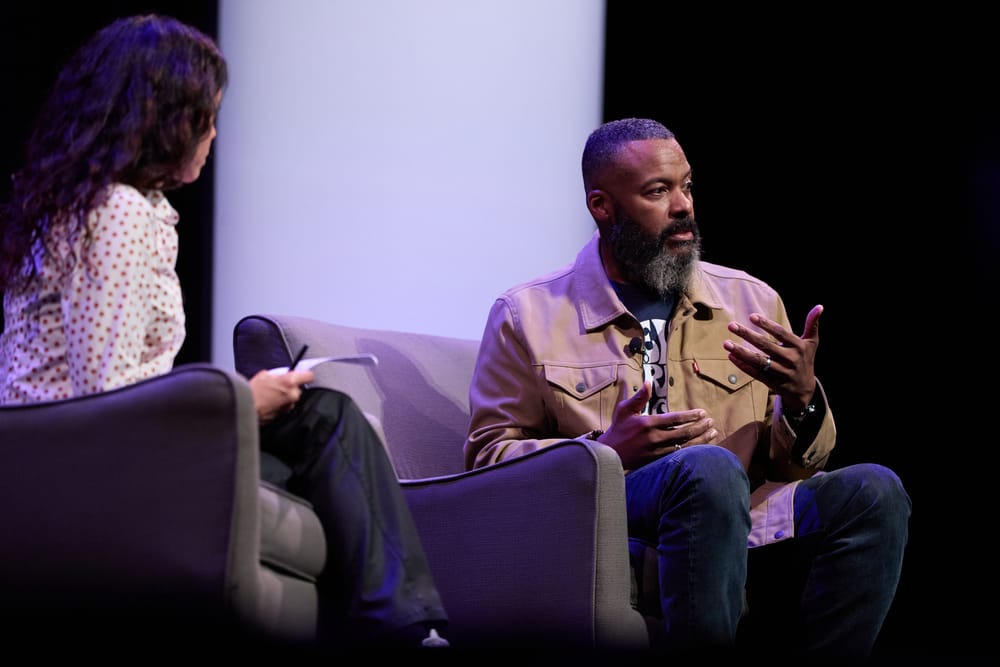
As companies rush to integrate AI tools into daily workflows, a challenge has emerged: how to make the technology feel less like a threat and more like a skill everyone can master. “We want to make sure everyone’s got the same starting place, but also room to experiment and explore in such a way that they want to learn more and be more advanced in their capabilities,” said Heidi Schisel, Genentech’s VP of people and culture. | As of 2024, five in 10 full-time employees in the United States have remote-capable jobs, according to a study by Gallup. Remote work has become “a new normal for people,” said Peter Cappelli, co-author of In Praise of the Office: The Limits to Hybrid and Remote Work. Cappelli spoke during a fireside chat about the changes, benefits, and disadvantages to remote work culture, and how to make the most of it. |

Upcoming Webinars
October 30
In today’s workplace, a silent standoff is unfolding. Employees and employers alike are disengaging, retreating into what researchers call “cold work”—a culture of quiet tension, mistrust, and emotional fatigue. But it doesn’t have to stay this way. Join us for a fireside chat exploring how CHROs can transform this climate by identifying and approaching these hidden tensions with a set of human-centered, research-driven practices that address the root causes of disengagement. We’ll discuss how to normalize work swaps, maintain a culture of repair, and build systems that support new ways of working—all while aligning with business outcomes.
November 5
As organizations grow and adopt new technologies, the challenge of delivering onboarding that is both personalized and scalable has never been greater. This session will explore how hands-on, workflow-based learning transforms the onboarding journey and helps employees build confidence from day one, adapt quickly to new tools, and feel connected to their roles and the organization. You’ll learn how companies can scale onboarding without losing the personalized experience employees need to thrive, why experiential learning has struggled to expand, and how simulations make practice consistent, measurable, and practical across the enterprise.
November 6
Hiring is changing fast, with shrinking talent pools, rising pressure to adopt AI responsibly, and growing candidate expectations. In 2026, the stakes will rise even higher. That's why experts from Employ are joining industry leaders for a forward-looking conversation on what’s reshaping recruiting and how top teams are getting ahead. You’ll learn how forward-thinking organizations are embracing skills-based hiring, using responsible AI to boost speed and trust, and improving retention through personalized candidate journeys. You’ll also discover how smarter screening and onboarding tools like Employ’s help hire the right people faster, and the key trends and tactics to future-proof your hiring strategy for 2026 and beyond.
November 20
As roles evolve and business needs accelerate, traditional hiring and development models are falling short. Forward-thinking HR teams are putting skills, not job titles, at the center of their talent strategies to enable smarter hiring, targeted development, and more agile internal mobility. In this webinar, a panel of leaders will share practical ways to identify critical skills, grow talent, and unlock internal mobility. You’ll learn how to align hiring with skill needs, close gaps through development, and take steps toward a more adaptive, skills-first workforce.
December & Beyond
Sponsor Spotlight: Enablo
Making Connection and Recognition Real for Frontline Teams:
When was the last time someone genuinely recognized your work—where you felt seen, valued, and reminded that your contributions matter? That question, posed by Dave Nixon, co-founder and CEO of Enablo, set the stage during the From Day One webinar on recognition and connection. Nixon spoke with Heather Halliday, customer success manager at Flip, to explore how leaders can make recognition more real, especially for frontline teams. Read the full story here.
Sponsor Spotlight: Betterworks
Shifting From Performance Evaluation to Performance Enablement:
“At the beginning of the year you get a goal, you meet with your manager, maybe, if you’re lucky, in June, you have a conversation about your own development or personal growth. And at the end of the year, on an employee's favorite day of the year, they get to sit in intense anticipation, anxiously waiting to hear from a manager where they score on a scale,” said Jamie Aitken, VP of HR transformation at Betterworks. It’s no wonder companies are looking for alternatives. During a thought leadership spotlight, Aitken shared an alternative approach, called performance enablement. Read the full story here.
From Day One in a City Near You

Convene 237 Park in Midtown Manhattan
The Rubell Museum in Wynwood in Downtown Miami
Hudson Loft on Hope Street in DTLA
The Georgia Aquarium in Downtown Atlanta
Asia Society Texas Center on Southmore Boulevard
Convene on Hamilton Square
Convene on 101 Park Ave
Convene on 101 Park Ave
JFK Presidential Library & Museum
Computer History Museum in Mountain View
Seattle Art Museum in Downtown Seattle
McNamara Alumni Center at the University of Minnesota
The Art Institute of Chicago in Grant Park
Alfred Lerner Hall at Columbia University
AT&T Executive Education and Conference Center
Half-Day Virtual Conferences

A technology boom has provided HR leaders with both opportunities and challenges. On the one hand, AI and other new tech can help match people to workforce needs, reduce bias in hiring, and produce an abundance of data to inform people-management decisions. On the other hand, HR experts need to venture beyond their comfort zones to embrace new tech platforms, collaborate energetically with colleagues with different expertise, choose among myriad new offerings, and recognize the limits and pitfalls of technology. What ideas and advice can be offered by HR leaders who’ve taken an innovative approach to embracing new technology? What are the new frontiers yet to be explored. Here’s your exclusive VIP pass.
Work changed radically in the first half of the decade, but more change is sure to come. What are the emerging contours? What further tasks will humans delegate to automation and what new skills will workers need to acquire? What will be the future of the full-time job, the career path, and the role of managers? HR leaders, researchers, thinkers and doers will offer their unconventional predictions about the future of work and workers.
At a time when the skills needed tomorrow are often unknown today, companies must build learning cultures that enable employees to upskill, reskill and confidently adapt to evolving roles. How can organizations cultivate a culture that embraces continuous learning and rapidly responds to shifting skill demands? What tools and programs, from gig learning marketplaces to AI-driven simulations, are most effective? How can personalized learning paths and micro-credentials accelerate skill development and career advancement?
March 11, 2026: Talent Acquisition in Transition: Hiring With Speed, Fairness, and Strategic Insight
A single job posting can attract hundreds, or even thousands, of applications due to accessible hiring platforms and technology. For talent teams, the challenge is no longer just attracting interest, but quickly identifying the right candidates, maintaining a fair process, and aligning hiring with long-term business goals. How can employers use AI and automation to streamline hiring without compromising fairness or human judgment? How is skills-based hiring changing how companies define fit and evaluate candidates?
Frontline, hourly workers keep businesses running but often face unique challenges, from limited access to training to feeling disconnected from corporate support. Employers need fresh strategies to attract and retain this vital workforce while investing in their growth and engagement. What innovative approaches, tech, and tools, are helping companies attract and retain frontline talent in a competitive labor market? How can employers design upskilling and development programs that fit the realities of frontline roles? In what ways can technology and communication tools improve connection and inclusion for this population?
As employees seek more from their workplace, support for mental health, family care, financial stability, and long-term security, benefits leaders are under pressure to deliver comprehensive solutions, even while meeting corporate needs for cost controls. What are the most in-demand benefits today, and how are employers prioritizing them? How can companies build total rewards strategies that are both sustainable and responsive to evolving employee needs? How are companies using feedback to refine and communicate their benefits?
Today’s employees are juggling caregiving, financial stress, and the daily challenge of staying mentally and physically well. How can employers tailor benefits to meet the distinct needs of multiple generations in the workforce while maximizing engagement and ROI? What are the most effective and forward-thinking benefits, from financial wellness and mental health resources to reproductive care and family support? How can companies evaluate the impact of their offerings on retention, engagement, and workplace culture?
Even with tighter budgets and leaner teams, employees are expected to continually deliver. Employers need smart tools and strategies that boost productivity while supporting performance and checking in on employees in ways that feel helpful rather than overbearing. What tools and technologies are proven to help employees work smarter, not harder? How can AI help workers save time on routine tasks so they can focus on what really matters? How can leaders measure productivity in ways that capture quality, creativity, and collaboration, not just hours worked?
Organizations must prepare for a future shaped by new technologies, changing employee expectations, and evolving social and economic trends. Success depends on adapting culture, strategy, and workforce models to thrive. What emerging technologies and workplace models will most impact how work gets done in the next five years? How can organizations build inclusive and resilient cultures that attract and retain diverse talent? How should companies balance automation and human skills to create meaningful and productive work?