- From Day One: People & HR
- Posts
- When Work Becomes Totally Rewarding
When Work Becomes Totally Rewarding

From Day One Editors
March 26, 2026 • Estimated Reading Time: 8 minutes
Empathy and individualism in the workplace have taken some hard knocks lately, but Claude Silver is undaunted. That’s because she connects those values directly to performance and productivity. Her executive role as chief heart officer at the ad firm VaynerX is not a job title you come across in business every day. But while rare in name, it’s powerful in impact, keeping employees connected and turning a company into a place worth showing up for.
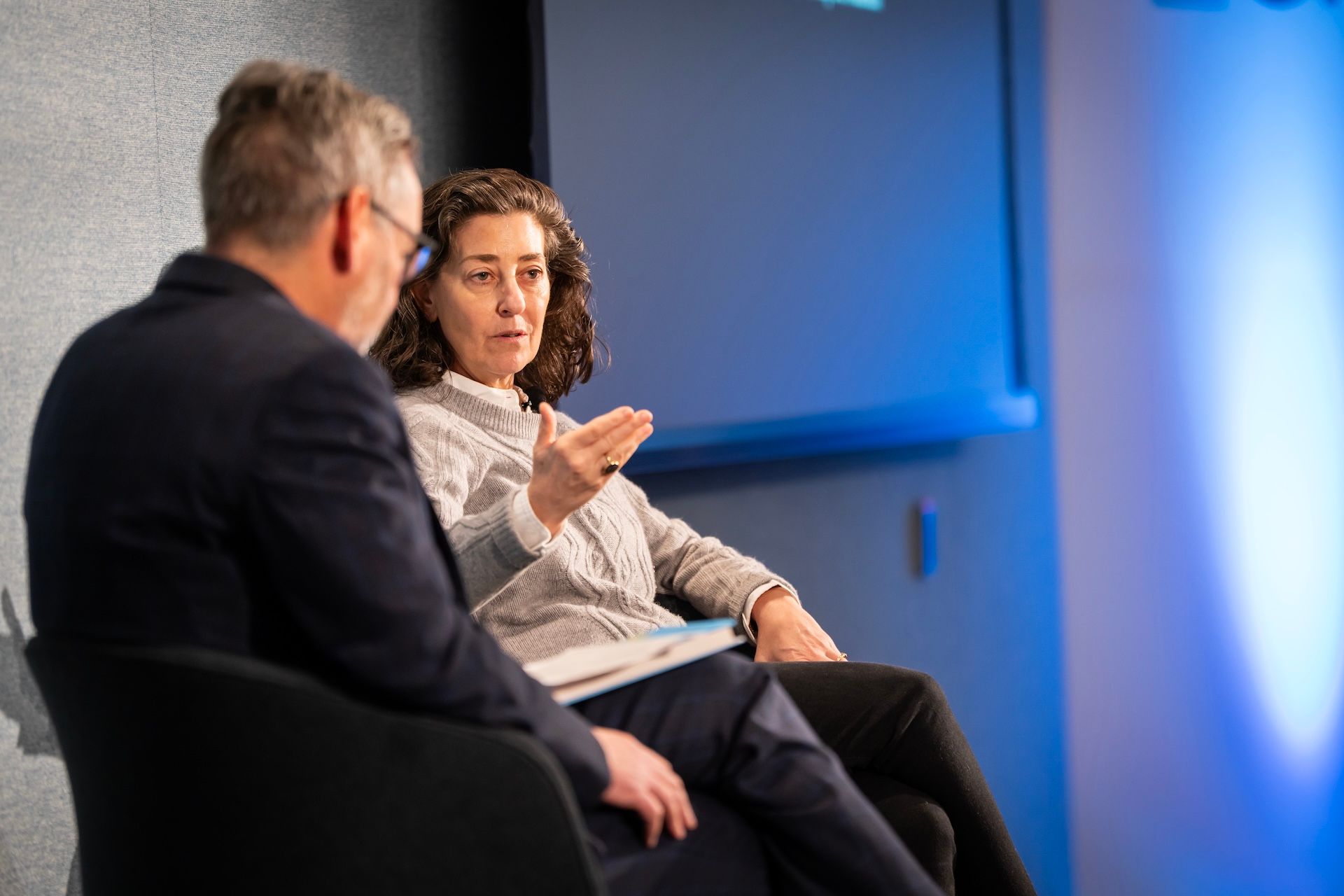
Silver, author of the recently published Be Yourself at Work, spoke about her book and how she’s helping employees show up as themselves during a fireside chat at From Day One’s New York City benefits conference.
When the CEO of the agency, Gary Vaynerchuk, asked Silver to be the chief heart officer, she had three questions about the job position: what her management role would be, what they are building there, and how to know if she’s successful.
As for what they’re building, “He said, we’re building the single greatest human organization in the history of time,” said Silver. And when it comes to knowing when she’s successful, Vaynerchuk told her that she would impact every single human being while deploying empathy throughout the offices.
“Deploying empathy is pretty ambiguous, and it’s pretty massive,” said Silver. “It depends on what empathy means in every given moment, because it’s going to mean something different to you and to you, and so being able to discern that without a lot of subjectivity or bias, is really the job,” she told session moderator Steve Koepp, From Day One’s editor in chief.
The hidden human cost of enterprise change
 | Most transformations look successful on paper, but beneath the surface, pressure builds—draining performance and increasing attrition. Based on insights from 2,000 leaders and employees, this report reveals the hidden cost of change and how organizations can better support people through continuous transformation. Download the report to understand the human cost of change and how to avoid the Transformation Tax. |
“It’s also creating and holding space for people, no matter where they are on their journey, with the hopes that we’ll get everyone from here to high performing to here to thriving, whether or not that’s in our four walls,” said Silver.
What Being Yourself at Work Really Means
When asked about the philosophy of her book, Silver shared that it’s a call to individuals to know who they are and what they offer. “What I’m saying is find yourself,” she said.
“You are in charge of yourself. You’re the CEO of yourself, and so through your own self-awareness journey, whether or not that starts today, yesterday, or on your last day on earth, begin that journey so that you can get to know yourself and know what your triggers are and where your limits are,” said Silver.
“The premise of the book is you deserve to be comfortable with yourself and to share yourself in any environment that you’re in,” said Silver. “I think we’ve been conditioned to think that others can change our behavior, but no one can change your behavior other than you, and so that’s really what it's all about.”
“I don’t subscribe to bringing your whole self to work, I really don't,” said Silver, emphasizing the importance of boundaries and professionalism. “You figure out what part you want to bring, and hopefully it’s a part that you enjoy and that others might get a kick out of.”
RECENT EVENT HIGHLIGHTS
At BNY, employees aren’t just learning AI, they’re building with it. Johanna Bazos, head of executive recruitment, recently became “Eliza certified,” enabling her to create autonomous agents on the firm’s AI platform. She’s since built tools for interview briefings, competency development, and more, all without writing code. | For Mark Monaghan, the future is something he’s eagerly awaited since he was a child, watching Star Trek with his dad. The show painted a picture of what a technologically advanced future could look like, and Mark couldn’t wait to be a part of it. “And now it’s here. The future is here, and it’s happening so fast,” he said. |


“We all know the data on the benefits of recognition: when you feel recognized, you feel great, your engagement goes up,” said Naomi Dishington, director of consulting at Workhuman. But did you know: “The giver also experiences that same lift in engagement, bump in productivity, that same likelihood to become a brand ambassador.” | Creating an experience that your customers want begins with your employees, says Marc Paulenich, CEO at the branding agency Hart, and it’s necessary to build a strategy that connects the two. Misaligned company values and broken policy promises can erode employee trust—a rising issue in today’s workplace, he says. |

Upcoming Webinars
March 31
Cell and gene therapies are moving rapidly from the research pipeline into real-world care. As these therapies become more prevalent, HR and benefits leaders are navigating a new set of questions: how to support employee access to breakthrough treatments, how to manage financial exposure and oversight, and how to prepare benefit strategies for a category of care still taking shape. In this webinar, industry leaders will offer clarity on how employers can begin to think strategically about readiness, governance, and long-term sustainability—highlighting what matters most today and which capabilities will grow in importance as cell and gene therapies emerge as a distinct high-cost category.
April 2
Many employees dealing with caregiving challenges never ask for help. They adjust schedules, miss meetings, or quietly take unplanned time off until those disruptions become performance or retention issues. This session explores why Backup Care, while widely offered and essential for caregivers, is often underused or misunderstood. Speakers will look at how care breaks down in real life, the barriers that limit access, and how employers are moving from reactive models to proactive support employees can rely on beyond emergencies. HR and benefits leaders will leave better equipped to identify where Backup Care breaks down in their own organization, and what changes can prevent quiet caregiving disruptions from turning into attrition.
April 14
Most sales teams don’t lose deals because of product or effort. They lose them because they struggle to communicate in the language executives use to make decisions. In this session, Kevin Cope and Ben Cook, authors of Business Acumen for Sales Success, draw on 20+ years of experience with global organizations, including 34 of the Fortune 50, to show why business acumen is now essential for modern sales teams. Rather than introducing a new sales methodology, this session focuses on the missing layer beneath every methodology: understanding how customers think about cash, profit, assets, growth, and people—and how those drivers shape executive priorities.
April 23
HR and Finance are being asked to solve the same equation: how to be both budget-smart and people-fair. But most managers are making critical pay, promotion, and headcount decisions with fragmented tools, incomplete data, and constant time pressure. The result? Wasted hours, educated guesses, challenged decisions, and burnout. In this webinar, HiBob Insights Lab will reveal data from its new global research surveying 4,700 full-time people managers across the US, UK, Europe, and ANZ—uncovering what really happens when HR and finance data live in separate systems.
May & Beyond
Sponsor Spotlight: LifeLabs Learning
The Competitive Advantage of Unlearning:
Continual learning is a necessity, but you can’t adequately learn the new things you need without unlearning the things you don’t. When you fail to unlearn, workforce development will fail. “This concept of unlearning is really interesting and important to me, because underneath all of our L&D and workforce investments, there’s this quiet failure that we really don’t talk enough about,” said Stephanie Shuler, chief people officer at LifeLabs Learning. “We’re in this age where we’ve never had as much learning happening, and yet, the behavior inside a lot of our organizations doesn’t appear to be having lasting, meaningful change at the same speed that our strategy expects or demands.” Read the full story here.
Sponsor Spotlight: Phenom
The Illusion of Choice: The Steps CHROs Must Take Before AI Decides for Them.
Cliff Jurkiewicz opened his session with a simple image: two doors at an airport gate. One reads “Pilot On Board.” The other reads “AI Pilot.” “I want to know what door you’re walking through,” he said. For Jurkiewicz, the VP of global strategy and executive evangelist at Phenom, the scenario is more than a metaphor. He’s a longtime pilot himself, and aviation analogies come naturally. But the thought experiment illustrates a deeper point: many organizations still believe they have time to decide whether artificial intelligence belongs in their HR strategy. In reality, he said, that decision is already being made. “We think we have unlimited choice. We have time,” Jurkiewicz said. “We really don’t right now.” Read the full story here.
From Day One in a City Near You

JFK Presidential Library & Museum
Computer History Museum in Mountain View
Computer History Museum in Mountain View
Seattle Art Museum in Downtown Seattle
McNamara Alumni Center at the University of Minnesota
The Art Institute of Chicago in Grant Park
Alfred Lerner Hall at Columbia University
AT&T Executive Education and Conference Center
The Union League of Philadelphia
Venue Six10 in Downtown Chicago
Hudson Loft in Downtown LA
Hudson Loft in Downtown LA
Convene at 237 Park Ave.
Convene at 237 Park Ave.
Half-Day Virtual Conferences
Frontline, hourly workers keep businesses running but often face unique challenges, from limited access to training to feeling disconnected from corporate support. Employers need fresh strategies to attract and retain this vital workforce while investing in their growth and engagement. What innovative approaches, tech, and tools, are helping companies attract and retain frontline talent in a competitive labor market? How can employers design upskilling and development programs that fit the realities of frontline roles? In what ways can technology and communication tools improve connection and inclusion for this population?
As employees seek more from their workplace, support for mental health, family care, financial stability, and long-term security, benefits leaders are under pressure to deliver comprehensive solutions, even while meeting corporate needs for cost controls. What are the most in-demand benefits today, and how are employers prioritizing them? How can companies build total rewards strategies that are both sustainable and responsive to evolving employee needs? How are companies using feedback to refine and communicate their benefits?
Brand marketers shape a company’s identity, reputation, and emotional connection through positioning, messaging, and storytelling. At the same time, consumers are quick to spot empty messaging and trend-following. To build trust and stand out, companies have to focus on consistent communication across channels like email, social media, influencer partnerships, and advertising. How can brands create authentic stories that truly resonate? How can they balance standing out with building trust and long-term loyalty?
Today’s employees are juggling caregiving, financial stress, and the daily challenge of staying mentally and physically well. How can employers tailor benefits to meet the distinct needs of multiple generations in the workforce while maximizing engagement and ROI? What are the most effective and forward-thinking benefits, from financial wellness and mental health resources to reproductive care and family support? How can companies evaluate the impact of their offerings on retention, engagement, and workplace culture?
With third-party cookies on the way out and stricter privacy regulations, marketers are rethinking how they measure and attribute success. Traditional tracking is getting harder, yet demonstrating ROI remains a top priority. How can marketers adapt attribution models when faced with data gaps? How can marketing teams leverage AI and machine learning to predict customer behavior or campaign outcomes? How can leaders elevate their team’s data literacy and ensure that employees at all levels can interpret and act on analytics insights?
Even with tighter budgets and leaner teams, employees are expected to continually deliver. Employers need smart tools and strategies that boost productivity while supporting performance and checking in on employees in ways that feel helpful rather than overbearing. What tools and technologies are proven to help employees work smarter, not harder? How can AI help workers save time on routine tasks so they can focus on what really matters? How can leaders measure productivity in ways that capture quality, creativity, and collaboration, not just hours worked?
Organizations must prepare for a future shaped by new technologies, changing employee expectations, and evolving social and economic trends. Success depends on adapting culture, strategy, and workforce models to thrive. What emerging technologies and workplace models will most impact how work gets done in the next five years? How can organizations build inclusive and resilient cultures that attract and retain diverse talent? How should companies balance automation and human skills to create meaningful and productive work?